In this tutorial, we explain the generalized s-plane electrical impedance. This impedance is also called as the complex impedance in the s Laplace domain. We also derive expressions for the electrical impedance of the resistor, capacitor, and inductor electrical components. The YouTube tutorial is given below.

Definition of Impedance
Consider the figure shown below. An electrical component is represented by the block EC. Let 


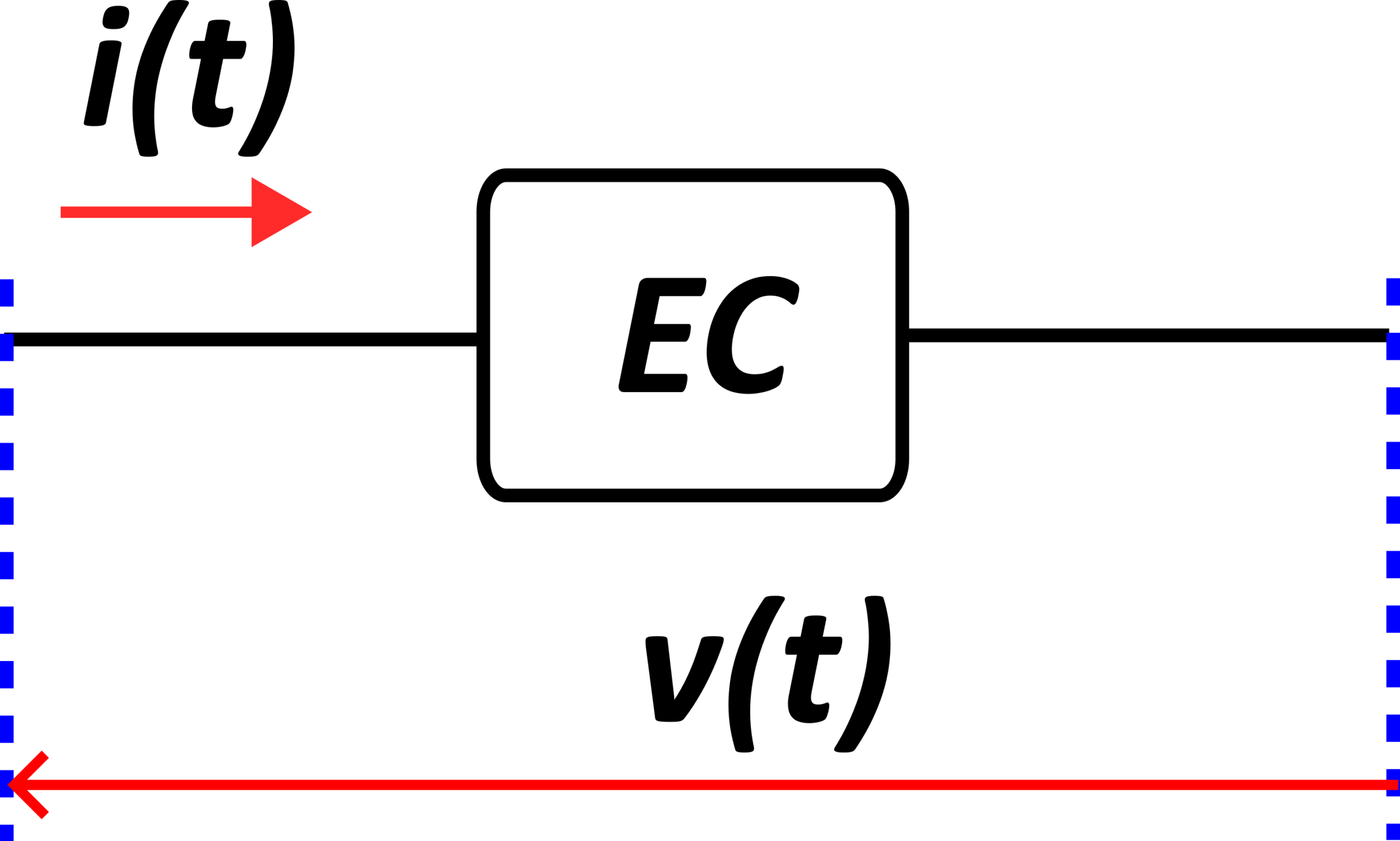
Next, let us introduce the following notation.
Let 

(1) 

where


Let 

(2) 

Definition of the impedance


(3) 

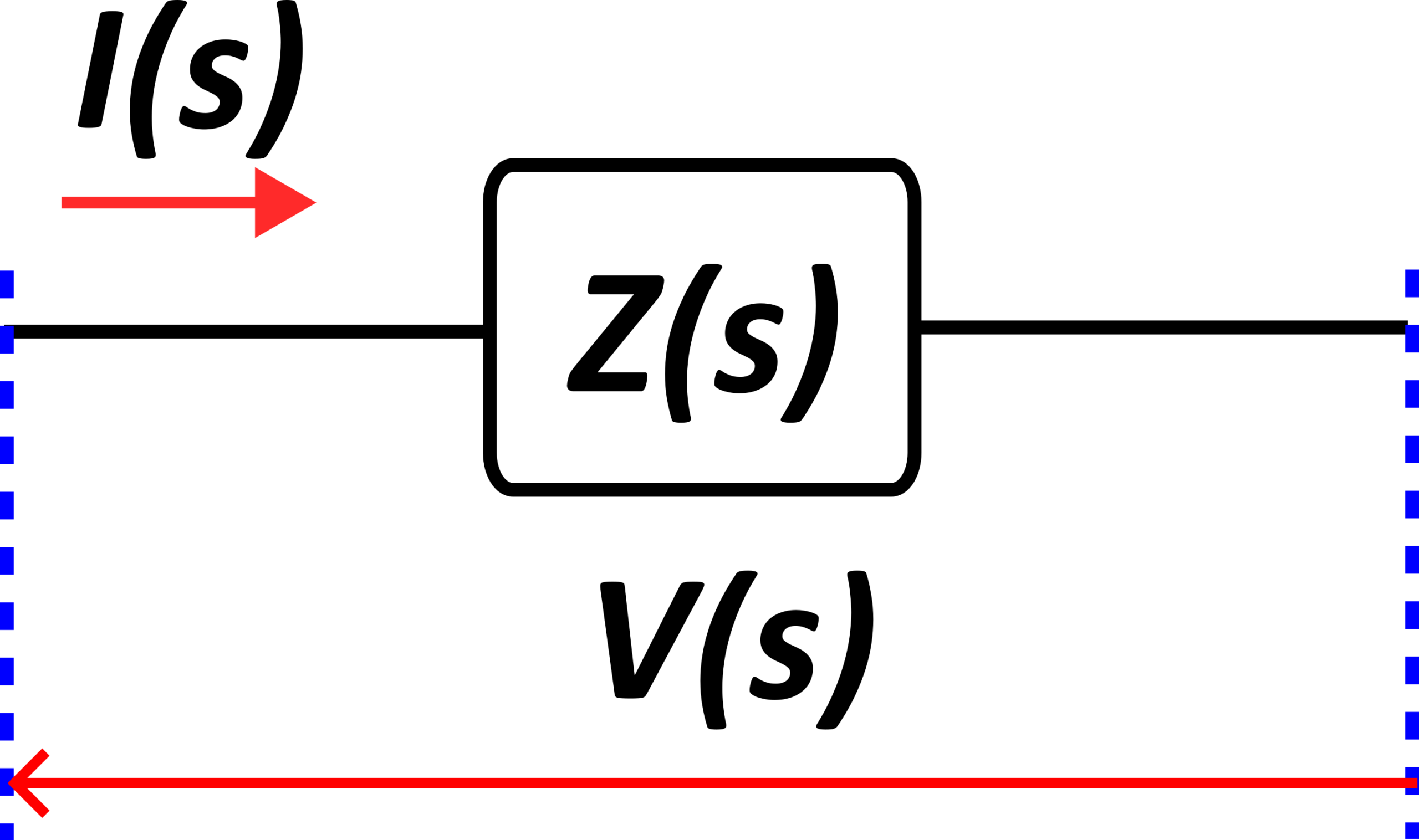
The complex impedance is shown in the figure below. Note that the current and voltage signals are represented in the Laplace s domain.

Impedance of an inductor component
To derive the impedance of an inductor component, we need to start from the basic equation governing the behavior of an inductor
(4) 

where 

(5) 

Taking into account that the definition of the impedance assumes zero initial conditions, from the last equation we have
(6) 

From the last equation, we have
(7) 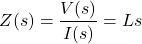

This is the expression for the impedance of the inductor.
Impedance of a capacitor component
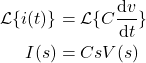
We start from the differential equation describing the capacitor component
(8) 

where 

(9) 

From the last equation, we have
(10) 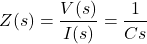

This is the expression for the impedance of the capacitor.
Impedance of a resistor component
We start from the Ohm’s law
(11) 

where 
(12) 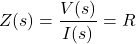

This is the expression for the impedance of the resistor.